
In most plant species, carbon dioxide (CO2) is fixed by Ribulose Bisphosphate Carboxylase/Oxygenase (Rubisco) in the Calvin cycle to generate a three-carbon compound (Figure 1). These plants are referred to as C3. As the name of the enzyme suggests, Rubisco also reacts with O2, and when this happens a toxic compound is produced that has to be eliminated by the plant. Because the detoxification process uses energy, the result is an overall decrease in the efficiency of photosynthesis. Species that use the C4 pathway (Figure 1) evolved to overcome this inefficiency. CO2 is initially fixed by the oxygen-insensitive carboxylase phosphoenolpyruvate carboxylase (PEPCase) into a four-carbon compound. The four-carbon compound is then decarboxylated, and the released CO2 is refixed in the Calvin cycle into a three-carbon compound.
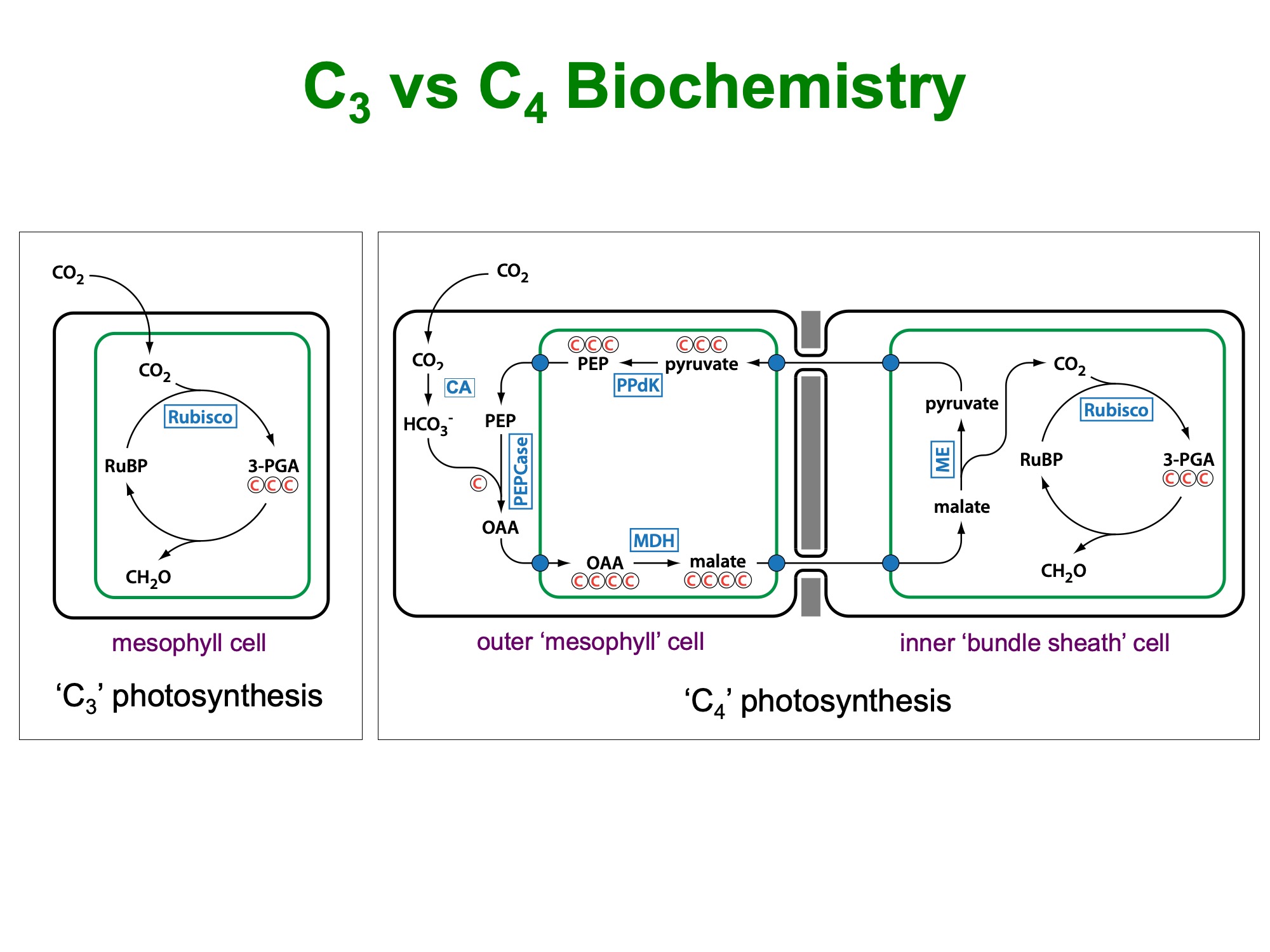
Figure 1. Schematic of C3 and C4 photosynthetic pathways
Most C4 plants, and certainly all known C4 grasses, compartmentalize photosynthetic reactions between two morphologically distinct cell-types that are arranged in concentric circles around veins. This so-called ‘Kranz’ anatomy comprises enlarged bundle sheath (BS) cells immediately adjacent to the vein that are surrounded by mesophyll (M) cells (Figure 2). This arrangement generates a consistent interveinal distance of four cells (vein-BS-M-M-BS-vein). Metabolic reactions are divided between BS and M cells, with CO2 being initially fixed in the M cells. C4 acids are then transported to the BS for decarboxylation and the released CO2 is refixed in the Calvin cycle. The C4 carbon shuttle thus concentrates CO2 at the site of Rubisco, reducing the likelihood of the oxygenation reaction occuring.

Figure 2. Rice (C3) and maize (C4) leaf anatomy. Note different vein spacing patterns. In the schematic, veins are coloured yellow, bundle sheath cells green and mesophyll cells blue.
 c4rice.com